



The Corona impact on our life and traditions
by Virginia Ciotti (2007) Liceo Sesto Properzio, Assisi/Italy on 2025-11-05
The following article was written by Virginia Ciotti (Liceo Sesto Properzio di Assisi/Italy), Julius Podszun (Gisela-Gymnasium München/Germany), Costanza Romualdi (Liceo Sesto Properzio di Assisi/Italy), e Matvii Tymchenko (Liceo Sesto Properzio di Assisi/Italy).
To read the German, Italian and French version, please scroll down.
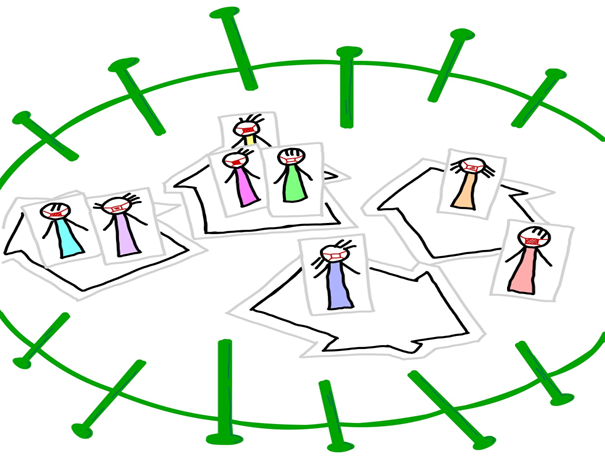
The image was created by Calina Spott (Gisela-Gymnasium München/Germany).
Corona – The Pandemic That Changed Not Only Our Everyday Life But Also Our Traditions
For many people it may be unbelievable that the Corona Virus already appeared around five years ago. It’s hard to remember that we were once stuck in a worldwide lockdown and couldn’t go out just for the simplest things like meeting friends and even going to work or school. Us forgetting about the old circumstances is certainly due to a human being’s ability to adapt to new setups quickly.
Back in 2020, we were suddenly told to stay at home which immediately became the reality that we had to adapt to. Nevertheless, when the number of infected people dropped, our lives basically went back to normal, and the population’s majority was no longer actually thinking about this pandemic. But if we have almost forgotten the conditions at that time, how can we determine what has really changed in all our lives because of this not only health but also social, ecological and cultural crisis. These changes will be presented in the following.
First, it’s important to discuss the development of worldwide politics. It’s interesting to see how policies concerning the Climate change, technical evolution, general household issues and especially health care changed since or during Covid. Already during the lockdown, voices were raised against the political health guidelines. These protesters demonstrated against compulsory vaccination. They were also called anti-vaccinationists. Recently, too, there have been many demonstrations against politics. But that is certainly also because there have been a lot of global crises recently. Nevertheless, it can be observed that since Corona and movements such as Fridays for Future, political engagement, especially among young people, has increased. This is a good development, as through protests and also milder expressions of opinion, younger people can also indirectly influence politics.
Besides that, the pandemic altered the boundaries between work and family life. With homes becoming offices and classrooms. It forced a collective rethinking of work-life balance and reemphasized the value of shared meals, home-cooked food, and family time. However, this also had a negative impact on the coexistence of several families. Constantly being stuck together caused more tension, which led to many arguments. In extreme cases, this even led to increased domestic violence. And many families also had serious financial problems, as many people were laid off from their jobs. These tensions still have an impact on many family lives today, as mobile phone use has also increased sharply during the pandemic and continues to this day.
Concerning everyday life, before the Corona pandemic, daily routines were kind of predictable. The rhythm of daily life - going to work or attending school, and meeting friends or extended family - was deeply disturbed. The virus forced governments to impose lockdowns or in other words social distancing measures that led to an almost overnight change, especially of people’s social life and routines. This lack of face-to-face interactions caused isolation for many people which was hard for old pensioners whose partners had already died. They virtually had to live all alone for many months. But of course, all of this also had a big impact on the mental health of young people. As already mentioned, they could not make or maintain social contacts. If at all, this could only happen online. This type of online friendship is therefore still very present today. While other young people, however, have developed serious mental problems. Since Corona, in recent years, the number of these has increased significantly.
Now, it’s important to take a closer look at traditions and how they’ve changed, gained influence or lost it. Therefore, we have prepared an interview concerning our personal experiences and impressions of this topic.
Interview on Life During the Pandemic and the Changes in Traditions
inside the Assisi trait d’union team
Interviewer: Today, we’re talking about how the pandemic has influenced our lives and traditions. Let’s start with an important question: how did you experience this period of change?
Interviewee: The pandemic was a very difficult time, but it taught us an important lesson: the ability to reinvent ourselves. When I talk about reinventing ourselves, I mean the ability to change, modify, and adapt traditions without losing them, because they’re fundamental to humanity. We had to find new ways to live, but without forgetting what makes us unique as individuals and as a community.
Interviewer: You mentioned the importance of keeping traditions alive. How did the pandemic make you rediscover the value of these habits?
Interviewee: During the lockdown, we were forced to stay home, and in some way, we rediscovered the importance of small moments. Time spent with family, laughter, watching movies together, playing board games… These were things that seemed trivial before, but during that period, they took on a new meaning. It was a way to stay connected, even from a distance, and to rediscover the beauty in simple things. This is the true value of traditions: they remind us what makes us happy and bring us together, even in the most difficult times.
Interviewer: Traditions are fundamental to every culture, but the pandemic seems to have put them to the test. What do you think would have happened without them?
Interviewee: If a population didn’t have traditions, it couldn’t truly exist. Traditions are the roots of a culture, the bond that connects generations. Without them, a country would lose its identity and history, and this would lead to decline. We can’t let that happen, because without the past, we can’t build a solid future. The pandemic made us realize how essential it is to pass down traditions to keep our collective identity alive.
Interviewer: Tell me about the changes you noticed in people’s daily habits during the pandemic. How did they react?
Interviewee: The pandemic disrupted our daily routines. People started spending more time at home, and the time spent on social media increased drastically. This often led to real dependency on technology. We went from an active social life, filled with meeting friends and going out, to a more solitary existence, glued to electronic devices. This shift had negative effects on people’s mental health and well-being. We didn’t know how to handle the situation, which created a sense of disorientation.
Interviewer: You also mentioned the fear of contracting Covid-19. How do you think this influenced our daily lives?
Interviewee: The fear of getting sick was one of the strongest emotions during the pandemic. We didn’t know what to expect, and every day we heard news about people dying. The thought of losing someone or falling ill was ever-present and amplified by the news constantly reporting death tolls. This fear influenced even the simplest actions. Even going out for a walk with the dog became a source of anxiety. We started overthinking everything, and this completely changed the way we lived.
Interviewer: Holidays are always a special time for families. How did they change during the pandemic?
Interviewee: Holidays, which were once moments of togetherness, were deeply affected by the pandemic. Traditions like Christmas, New Year’s, and family games were completely transformed. Many children, instead of enjoying board games, were glued to electronic devices like smartphones and tablets. This dependency became difficult to manage. In the past, we were more present with one another, eagerly awaiting games like bingo or Christmas movies. But during the pandemic, the way we celebrated changed, and not always for the better. It’s a shift that also affected family life and our relationship with technology.
Interviewer: And what about sleep habits? Was there a transformation in that area as well?
Interviewee: Absolutely. Children, and even many adults, began neglecting sleep. During isolation, many sacrificed rest to stay up using electronic devices. This is another habit that has changed drastically. Before, it was common to take an afternoon nap, especially after spending time at the park or in preschool. Now, however, young people sleep less, and this is a side effect of the pandemic. Technology has taken over, even at the cost of health and well-being.
Interviewer: In summary, how do you think the pandemic has impacted people and the world as a whole?
Interviewee: The pandemic profoundly impacted people and the world. It changed our traditions, our habits, and our way of life. It forced us to reinvent ourselves, but it also highlighted the dangers of dependency on technology and fear. However, I believe we can rediscover the value of traditions, the beauty of small moments, and learn to live with fear. The pandemic taught us that we can adapt, but also that we must protect what truly matters: our roots, our identity, and our well-being.
Interviewer: Thank you for sharing your experience. It was a pleasure talking to you.
Interviewee: Thank you!
Corona – Die Pandemie, die nicht nur unseren Alltag, sondern auch unsere Traditionen veränderte
Für viele Menschen mag es unglaublich sein, dass das Corona-Virus bereits vor rund fünf Jahren aufgetreten ist. Es ist schwer, sich daran zu erinnern. Es ist schwer, sich daran zu erinnern, dass wir einst in einer weltweiten Abriegelung feststeckten und nicht in der Lage waren, auch nur für die einfachsten Dinge wie das Treffen mit Freunden oder den Gang zur Arbeit oder Schule auszugehen. Dass wir die alten Verhältnisse vergessen haben, liegt sicherlich an der Fähigkeit des Menschen, sich sehr schnell an neue Gegebenheiten anzupassen. Im Jahr 2020 wurde uns plötzlich gesagt, wir sollten zu Hause bleiben, und das wurde sofort zur Realität, an die wir uns anpassen mussten. Doch als die Zahl der Infizierten zurückging, kehrte unser Leben im Grunde zur Normalität zurück, und die Mehrheit der Bevölkerung dachte nicht mehr wirklich an diese Pandemie. Aber wenn wir die damaligen Verhältnisse schon fast vergessen haben, wie können wir dann feststellen, was sich durch diese nicht nur gesundheitliche, sondern auch soziale, ökologische und kulturelle Krise in unser aller Leben wirklich verändert hat? Diese Veränderungen sollen im Folgenden dargestellt werden.
Zunächst ist es wichtig, die Entwicklung der weltweiten Politik zu diskutieren. Es ist auf jeden Fall interessant zu sehen, wie sich die Politik in Bezug auf den Klimawandel, die technische Entwicklung, allgemeine Haushaltsfragen und insbesondere die Gesundheitsversorgung seit oder während Covid verändert hat. Schon während der Abriegelung wurden Stimmen gegen die politischen Gesundheitsrichtlinien laut. Diese Demonstranten demonstrierten gegen die Impfpflicht. Sie wurden auch als Impfgegner bezeichnet. Auch in letzter Zeit gab es viele Demonstrationen gegen die Politik. Das liegt aber sicher auch daran, dass es in letzter Zeit viele globale Krisen gegeben hat. Dennoch ist zu beobachten, dass seit Corona und Bewegungen wie Fridays for Future das politische Engagement, vor allem von jungen Menschen, zugenommen hat. Das ist eine gute Entwicklung, denn durch Proteste und auch mildere Meinungsäußerungen können auch jüngere Menschen indirekt Einfluss auf die Politik nehmen.
Außerdem hat die Pandemie die Grenzen zwischen Arbeits- und Familienleben verschoben. Die Wohnungen wurden zu Büros und Klassenzimmern. Sie zwang zu einem kollektiven Umdenken in Bezug auf die Vereinbarkeit von Beruf und Familie und betonte den Wert gemeinsamer Mahlzeiten, hausgemachter Speisen und der Zeit mit der Familie. Dies hatte jedoch auch negative Auswirkungen auf das Zusammenleben mehrerer Familien. Das ständige Zusammensein führte zu mehr Spannungen und damit zu vielen Auseinandersetzungen. In extremen Fällen führte dies sogar zu einer Zunahme der häuslichen Gewalt. Und viele Familien hatten auch ernsthafte finanzielle Probleme, da viele Menschen ihren Arbeitsplatz verloren hatten. Diese Spannungen wirken sich auch heute noch auf das Leben vieler Familien aus, da auch die Nutzung von Mobiltelefonen während der Pandemie stark zugenommen hat und bis heute anhält.
Was den Alltag betrifft, so waren die täglichen Abläufe vor der Corona-Pandemie in gewisser Weise vorhersehbar. Der Rhythmus des täglichen Lebens - zur Arbeit oder zur Schule zu gehen und Freunde oder die Großfamilie zu treffen - wurde empfindlich gestört. Das Virus zwang die Regierungen, Abriegelungsmaßnahmen oder mit anderen Worten Maßnahmen zur sozialen Distanzierung zu ergreifen, die fast über Nacht zu einer Veränderung insbesondere des sozialen Lebens und der Routinen der Menschen führten. Dieser Mangel an persönlichen Kontakten führte bei vielen Menschen zu einer Isolation, die für alte Rentner, deren Partner bereits verstorben waren, besonders hart war. Sie mussten viele Monate lang praktisch ganz allein leben. Aber natürlich hatte all dies auch große Auswirkungen auf die psychische Gesundheit der jungen Menschen. Wie bereits erwähnt, waren sie nicht wirklich in der Lage, soziale Kontakte zu knüpfen oder zu pflegen. Wenn überhaupt, konnte dies nur online geschehen. Diese Art von Online-Freundschaft ist daher auch heute noch sehr präsent. Andere junge Menschen hingegen haben ernsthafte psychische Probleme entwickelt. Seit Corona bzw. in den letzten Jahren hat die Zahl dieser Jugendlichen deutlich zugenommen.
Jetzt ist es wichtig, die Traditionen genauer zu betrachten und zu sehen, wie sie sich verändert, an Einfluss gewonnen oder verloren haben. Deshalb haben wir ein Interview über unsere persönlichen Erfahrungen und Eindrücke zu diesem Thema vorbereitet.
Interview über das Leben während der Pandemie und die Veränderungen der Traditionen
innerhalb des trait d`union-Teams von Assisi
Interviewer: Heute sprechen wir darüber, wie die Pandemie unser Leben und unsere Traditionen beeinflusst hat. Lasst uns mit einer wichtigen Frage beginnen: Wie habt ihr diese Zeit des Wandels erlebt?
Befragte: Die Pandemie war eine sehr schwierige Zeit, aber sie hat uns eine wichtige Lektion erteilt: die Fähigkeit, uns selbst neu zu erfinden. Wenn ich davon spreche, uns neu zu erfinden, meine ich die Fähigkeit, Traditionen zu verändern, zu modifizieren und anzupassen, ohne sie zu verlieren, denn sie sind grundlegend für die Menschheit. Wir mussten neue Wege finden, um zu leben, ohne dabei zu vergessen, was uns als Individuen und als Gemeinschaft einzigartig macht.
Interviewer: Du hast erwähnt, wie wichtig es ist, Traditionen am Leben zu erhalten. Wie hat die Pandemie dazu geführt, dass du den Wert dieser Gewohnheiten wiederentdeckt hast?
Befragter: Während des Lockdowns waren wir gezwungen, zu Hause zu bleiben, und in gewisser Weise haben wir die Bedeutung der kleinen Momente wiederentdeckt. Zeit mit der Familie zu verbringen, zu lachen, gemeinsam Filme anzuschauen, Brettspiele zu spielen... Das waren Dinge, die vorher trivial erschienen, aber in dieser Zeit bekamen sie eine neue Bedeutung. Es war eine Möglichkeit, in Verbindung zu bleiben, selbst aus der Ferne, und die Schönheit der einfachen Dinge wiederzuentdecken. Das ist der wahre Wert von Traditionen: Sie erinnern uns daran, was uns glücklich macht und bringen uns zusammen, selbst in den schwierigsten Zeiten.
Interviewer: Traditionen sind für jede Kultur von grundlegender Bedeutung, aber die Pandemie scheint sie auf die Probe gestellt zu haben. Was wäre Ihrer Meinung nach ohne sie passiert?
Befragter: Wenn eine Bevölkerung keine Traditionen hätte, könnte sie nicht wirklich existieren. Traditionen sind die Wurzeln einer Kultur, das Band, das die Generationen miteinander verbindet. Ohne sie würde ein Land seine Identität und seine Geschichte verlieren, und das würde zum Niedergang führen. Das können wir nicht zulassen, denn ohne die Vergangenheit können wir keine solide Zukunft aufbauen. Die Pandemie hat uns vor Augen geführt, wie wichtig es ist, Traditionen weiterzugeben, um unsere kollektive Identität zu bewahren.
Interviewer: Erzähl mir von den Veränderungen, die du bei den täglichen Gewohnheiten der Menschen während der Pandemie festgestellt hast. Wie haben sie reagiert?
Interviewpartnerin: Die Pandemie hat unseren Tagesablauf durcheinandergebracht. Die Menschen verbrachten mehr Zeit zu Hause, und die Zeit, die sie mit sozialen Medien verbrachten, stieg drastisch an. Dies führte oft zu einer echten Abhängigkeit von der Technologie. Wir wechselten von einem aktiven sozialen Leben, in dem wir uns mit Freunden trafen und ausgingen, zu einer eher einsamen Existenz, die an elektronischen Geräten klebte. Dieser Wandel hatte negative Auswirkungen auf die psychische Gesundheit und das Wohlbefinden der Menschen. Wir wussten nicht, wie wir mit der Situation umgehen sollten, was zu einem Gefühl der Orientierungslosigkeit führte.
Interviewer: Du erwähntest auch die Angst vor einer Ansteckung mit Covid-19. Wie, glaubst du, hat dies unser tägliches Leben beeinflusst?
Befragter: Die Angst, krank zu werden, war eines der stärksten Gefühle während der Pandemie. Wir wussten nicht, was uns erwartete, und jeden Tag hörten wir Nachrichten über sterbende Menschen. Der Gedanke, jemanden zu verlieren oder zu erkranken, war allgegenwärtig und wurde durch die ständigen Todesmeldungen in den Nachrichten noch verstärkt. Diese Angst beeinflusste selbst die einfachsten Handlungen. Selbst ein Spaziergang mit dem Hund wurde zu einer Quelle der Angst. Wir fingen an, über alles nachzudenken, und das veränderte unsere Lebensweise völlig.
Interviewer: Die Feiertage sind immer eine besondere Zeit für Familien. Wie haben sie sich während der Pandemie verändert?
Interviewpartnerin: Die Feiertage, die einst Momente der Zweisamkeit waren, wurden durch die Pandemie stark beeinträchtigt. Traditionen wie Weihnachten, Silvester und Familienspiele wurden völlig umgestaltet. Statt sich an Brettspielen zu erfreuen, waren viele Kinder an elektronische Geräte wie Smartphones und Tablets gefesselt. Diese Abhängigkeit war nur noch schwer zu bewältigen. In der Vergangenheit waren wir viel präsenter und freuten uns auf Spiele wie Bingo oder Weihnachtsfilme. Doch während der Pandemie änderte sich die Art und Weise, wie wir feierten, und das nicht immer zum Besseren. Diese Veränderung wirkte sich auch auf das Familienleben und unser Verhältnis zur Technologie aus.
Interviewer: Und wie sieht es mit den Schlafgewohnheiten aus? Gab es auch in diesem Bereich eine Veränderung?
Befragter: Auf jeden Fall. Kinder und sogar viele Erwachsene begannen, den Schlaf zu vernachlässigen. Während der Isolation opferten viele die Ruhe, um mit elektronischen Geräten aufzubleiben. Dies ist eine weitere Gewohnheit, die sich drastisch verändert hat. Früher war es üblich, ein Nachmittagsschläfchen zu halten, vor allem, wenn man im Park oder in der Vorschule war. Heute jedoch schlafen junge Menschen weniger, und das ist eine Nebenwirkung der Pandemie. Die Technologie hat die Oberhand gewonnen, auch auf Kosten von Gesundheit und Wohlbefinden.
Interviewer: Wie hat sich die Pandemie Ihrer Meinung nach auf die Menschen und die Welt als Ganzes ausgewirkt?
Interviewpartnerin: Die Pandemie hat die Menschen und die Welt tiefgreifend verändert. Sie hat unsere Traditionen, unsere Gewohnheiten und unsere Lebensweise verändert. Sie hat uns gezwungen, uns neu zu erfinden, aber sie hat auch die Gefahren der Abhängigkeit von der Technologie und der Angst aufgezeigt. Ich glaube jedoch, dass wir den Wert von Traditionen und die Schönheit der kleinen Momente wiederentdecken und lernen können, mit der Angst zu leben. Die Pandemie hat uns gelehrt, dass wir uns anpassen können, aber auch, dass wir das schützen müssen, was wirklich wichtig ist: unsere Wurzeln, unsere Identität und unser Wohlbefinden.
Interviewer: Danke, dass du deine Erfahrungen mit uns teilst. Es war mir ein Vergnügen, mit dir zu sprechen.
Befragter: Vielen Dank!
Corona – La pandemia che ha cambiato non solo la nostra vita quotidiana ma anche le nostre tradizioni
Per molte persone può essere incredibile che il virus Corona sia apparso già circa cinque anni fa. È difficile ricordare che una volta eravamo bloccati in tutto il mondo e non potevamo uscire nemmeno per le cose più semplici, come incontrare gli amici e persino andare al lavoro o a scuola. Il fatto che ci dimentichiamo delle vecchie circostanze è certamente dovuto alla capacità dell’essere umano di adattarsi molto rapidamente a nuovi assetti. Nel 2020, all’improvviso, ci è stato detto di restare a casa e questa è diventata la realtà a cui ci siamo dovuti adattare. Tuttavia, quando il numero di persone infette è diminuito, la nostra vita è tornata sostanzialmente alla normalità e la maggioranza della popolazione non ha più pensato a questa pandemia. Ma se abbiamo quasi dimenticato le condizioni di allora, come possiamo determinare cosa è cambiato realmente nella nostra vita a seguito di questa crisi non solo sanitaria ma anche sociale, ecologica e culturale. Questi cambiamenti saranno presentati di seguito.
In primo luogo, è importante discutere lo sviluppo della politica mondiale. È sicuramente interessante vedere come sono cambiate le politiche relative al cambiamento climatico, all’evoluzione tecnica, alle questioni domestiche in generale e soprattutto all’assistenza sanitaria dopo o durante il Covid. Già durante l’isolamento si sono levate voci contro le linee guida politiche sulla salute. Questi manifestanti hanno manifestato contro la vaccinazione obbligatoria. Sono stati chiamati anche antivaccinisti. Anche di recente ci sono state molte manifestazioni contro la politica. Ma questo è certamente dovuto anche al fatto che di recente ci sono state molte crisi globali. Tuttavia, si può osservare che dopo Corona e movimenti come Friday for Future, l’impegno politico, soprattutto tra i giovani, è aumentato. Si tratta di uno sviluppo positivo, poiché attraverso le proteste e le espressioni di opinione più blande, i giovani possono influenzare indirettamente la politica.
Inoltre, la pandemia ha alterato i confini tra lavoro e vita familiare. Le case sono diventate uffici e aule scolastiche. Ha imposto un ripensamento collettivo dell’equilibrio tra lavoro e vita privata e ha ribadito il valore dei pasti condivisi, del cibo cucinato in casa e del tempo trascorso in famiglia. Tuttavia, ciò ha avuto anche un impatto negativo sulla coesistenza di diverse famiglie. Il fatto di essere costantemente uniti ha provocato una maggiore tensione, che ha portato a molti litigi. In casi estremi, ciò ha portato persino a un aumento della violenza domestica. Inoltre, molte famiglie hanno avuto seri problemi finanziari, poiché molte persone sono state licenziate. Queste tensioni hanno ancora oggi un impatto sulla vita di molte famiglie, dato che l’uso del telefono cellulare è aumentato notevolmente durante la pandemia e continua ancora oggi.
Per quanto riguarda la vita quotidiana, prima della pandemia di Corona, la routine quotidiana era piuttosto prevedibile. Il ritmo della vita quotidiana - andare al lavoro o a scuola, incontrare gli amici o la famiglia allargata - era profondamente disturbato. Il virus ha costretto i governi a imporre misure di blocco o, in altre parole, di allontanamento sociale che hanno portato a un cambiamento quasi repentino, soprattutto della vita sociale e delle routine delle persone. La mancanza di interazioni faccia a faccia ha causato l’isolamento di molte persone, che è stato molto duro per gli anziani pensionati i cui partner erano già morti. Praticamente dovevano vivere da soli per molti mesi. Ma naturalmente tutto questo ha avuto un forte impatto anche sulla salute mentale dei giovani. Come già detto, non erano in grado di stabilire o mantenere contatti sociali. Se mai, questo poteva avvenire solo online. Questo tipo di amicizia online è quindi ancora molto presente oggi. Altri giovani, invece, hanno sviluppato seri problemi mentali. Dopo Corona, o negli ultimi anni, il numero di questi è aumentato in modo significativo.
Ora, è importante dare un’occhiata più da vicino alle tradizioni e a come sono cambiate, hanno guadagnato influenza o l’hanno persa. Per questo abbiamo preparato un’intervista sulle nostre esperienze personali e sulle nostre impressioni su questo tema.
Intervista sulla vita durante la pandemia e il cambiamento delle tradizioni
al all`interno del trait d`union team di Assisi
Intervistatore: Oggi parliamo di come la pandemia ha influenzato la nostra vita e le tradizioni. Iniziamo con una domanda importante: come hai vissuto questo periodo di cambiamento?
Intervistato: La pandemia è stata un periodo molto difficile, ma ci ha insegnato una lezione importante: la capacità di reinventarsi. Quando parlo di reinventarsi, intendo la capacità di cambiare, modificare e adattare le tradizioni, senza perderle, perché sono fondamentali per l’umanità. Abbiamo dovuto trovare nuovi modi di vivere, ma senza dimenticare ciò che ci rende unici come persone e come comunità.
Intervistatore: Hai menzionato l’importanza di mantenere vive le tradizioni. In che modo la pandemia ti ha fatto riscoprire il valore di queste abitudini?
Intervistato: Durante il lockdown, siamo stati costretti a restare a casa, e in qualche modo abbiamo riscoperto l’importanza dei piccoli momenti. Il tempo passato in famiglia, le risate, i film guardati insieme, i giochi da tavolo... sono tutte cose che sembravano scontate prima, ma che in quel periodo hanno assunto un nuovo significato. È stato un modo per mantenerci vicini, anche a distanza, e per riscoprire la bellezza nelle cose semplici. Questo è il vero valore delle tradizioni: ci ricordano cosa ci rende felici e ci uniscono, anche nei momenti più difficili.
Intervistatore: Le tradizioni sono fondamentali per ogni popolo, ma la pandemia sembra averle messe a dura prova. Cosa pensi che sarebbe successo senza di esse?
Intervistato: Se una popolazione non avesse tradizioni, non potrebbe davvero esistere. Le tradizioni sono le radici di una cultura, il legame che unisce le generazioni. Senza di esse, un paese perderebbe la propria identità e la propria storia, e questo porterebbe al decadimento. Non possiamo permettere che succeda, perché senza il passato, non possiamo costruire un futuro solido. La pandemia ci ha fatto capire quanto sia fondamentale tramandare le tradizioni per mantenere viva la nostra identità collettiva.
Intervistatore: Parlami del cambiamento che hai notato nelle abitudini quotidiane delle persone durante la pandemia. Come hanno reagito?
Intervistato: La pandemia ha stravolto le nostre routine quotidiane. La gente ha cominciato a rimanere più a lungo a casa, e il tempo trascorso sui social media è aumentato drasticamente. Questo ha portato, in molti casi, a una vera e propria dipendenza dalla tecnologia. Si è passati da una vita sociale attiva, fatta di incontri con gli amici e uscite, a un’esistenza più solitaria, con l’attaccamento ai dispositivi elettronici. Questo cambiamento ha avuto effetti negativi sulla salute mentale e sul benessere delle persone. Non sapevamo come affrontare la situazione, e questo ha creato un senso di disorientamento.
Intervistatore: Hai parlato anche della paura di ammalarsi di Covid-19. Come pensi che questo abbia influenzato la nostra vita quotidiana?
Intervistato: La paura di ammalarsi è stata una delle emozioni più forti durante la pandemia. Non sapevamo cosa aspettarci e sentivamo ogni giorno notizie di persone che morivano. Il pensiero di perdere qualcuno o di ammalarsi è stato molto presente, ed è stato amplificato dai notiziari, che riportavano continuamente il numero delle vittime. Questa paura ha influenzato anche le nostre abitudini. Anche le azioni più semplici, come uscire a fare una passeggiata con il cane, sono diventate fonte di ansia. Abbiamo iniziato a fare paranoie, e questo ha cambiato completamente il nostro modo di vivere.
Intervistatore: Le festività sono sempre un momento speciale per le famiglie. Come sono cambiate durante la pandemia?
Intervistato: Le festività, che prima rappresentavano un momento di unione, sono state influenzate dalla pandemia. Tradizioni come il Natale, il Capodanno, i giochi in famiglia sono state completamente stravolte. Molti bambini, invece di divertirsi con i giochi da tavolo, erano attaccati ai dispositivi elettronici, come smartphone e tablet. È stata una vera e propria dipendenza che è diventata difficile da gestire. In passato, eravamo tutti più presenti l’uno con l’altro, aspettando con ansia i giochi come la tombola o i film natalizi. Ma con la pandemia, il nostro modo di fare festa è cambiato, e non sempre in meglio. È un cambiamento che ha coinvolto anche la nostra vita familiare e il nostro rapporto con la tecnologia.
Intervistatore: E per quanto riguarda le abitudini legate al sonno? C’è stata una trasformazione anche in questo senso?
Intervistato: Assolutamente. I bambini, ma anche molti adulti, hanno cominciato a trascurare il sonno. Durante il periodo di isolamento, molti hanno sacrificato le ore di riposo per restare svegli a utilizzare i dispositivi elettronici. Questa è un’altra abitudine che è cambiata in modo drastico. Prima, era comune fare il riposino pomeridiano, soprattutto dopo un pomeriggio passato al parco o all’asilo. Ora, però, i giovani dormono poco, e questo è un effetto collaterale della pandemia. La tecnologia ha preso il sopravvento, anche sulla salute e sul benessere.
Intervistatore: Quindi, in sintesi, come pensi che la pandemia abbia segnato le persone e il mondo intero?
Intervistato: La pandemia ha segnato profondamente le persone e il mondo. Ha cambiato le nostre tradizioni, le nostre abitudini e il nostro modo di vivere. Ci ha costretto a reinventarci, ma ha anche messo in luce i pericoli legati alla dipendenza dalla tecnologia e alla paura. Tuttavia, credo che possiamo riscoprire il valore delle tradizioni, riscoprire la bellezza dei piccoli momenti e imparare a convivere con la paura. La pandemia ci ha insegnato che possiamo adattarci, ma anche che dobbiamo proteggere ciò che è veramente importante: le nostre radici, la nostra identità e il nostro benessere.
Intervistatore: Grazie per aver condiviso la tua esperienza. È stato un piacere parlare con te.
Intervistato: Grazie a te!
Corona – La pandémie qui a changé non seulement notre quotidien mais aussi nos traditions
Pour beaucoup de gens, il peut être incroyable que le coronavirus soit apparu il y a environ cinq ans. Il est difficile de se rappeler qu’autrefois, nous étions bloqués dans un confinement mondial et que nous ne pouvions pas sortir pour les choses les plus simples comme rencontrer des amis ou même aller au travail ou à l’école. Le fait que nous oubliions les anciennes circonstances est certainement dû à la capacité de l’être humain à s’adapter très rapidement à de nouvelles situations. En 2020, on nous a soudainement dit de rester à la maison, ce qui est immédiatement devenu une réalité à laquelle nous avons dû nous adapter. Néanmoins, lorsque le nombre de personnes infectées a diminué, notre vie est revenue à la normale et la majorité de la population ne pense plus vraiment à cette pandémie. Mais si nous avons presque oublié les conditions de l’époque, comment pouvons-nous déterminer ce qui a réellement changé dans toutes nos vies à la suite de cette crise non seulement sanitaire mais aussi sociale, écologique et culturelle. Ces changements sont présentés ci-dessous.
Il est important de commencer par aborder l’évolution de la politique mondiale. Il est intéressant de voir comment les politiques concernant le changement climatique, l’évolution technique, les questions ménagères générales et surtout les soins de santé ont changé depuis ou pendant le Covid. Déjà pendant le confinement, des voix se sont élevées contre les directives politiques en matière de santé. Ces manifestants ont manifesté contre la vaccination obligatoire. On les a également qualifiés d’anti-vaccinationnistes. Récemment, il y a eu aussi de nombreuses manifestations contre la politique. Mais c’est certainement aussi parce qu’il y a eu beaucoup de crises mondiales ces derniers temps. Néanmoins, on peut observer que depuis le coronavirus et des mouvements tels que Fridays for Future, l’engagement politique, en particulier chez les jeunes, a augmenté. C’est une bonne évolution, car par le biais de protestations et d’expressions d’opinion plus modérées, les jeunes peuvent aussi influencer indirectement la politique.
En outre, la pandémie a modifié les frontières entre vie professionnelle et vie familiale. Les maisons sont devenues des bureaux et des salles de classe. Elle a forcé une refonte collective de l’équilibre entre vie professionnelle et vie privée et a remis l’accent sur la valeur des repas partagés, de la nourriture faite maison et du temps en famille. Cependant, cela a également eu un impact négatif sur la coexistence de plusieurs familles. Le fait de rester constamment collés les uns aux autres a entraîné des tensions supplémentaires, qui ont donné lieu à de nombreuses disputes. Dans les cas extrêmes, cela a même conduit à une augmentation des violences domestiques. De nombreuses familles ont également connu de graves problèmes financiers, car de nombreuses personnes ont perdu leur emploi. Ces tensions ont encore aujourd’hui un impact sur la vie de nombreuses familles, car l’utilisation des téléphones portables a également fortement augmenté pendant la pandémie et se poursuit encore aujourd’hui.
Avant la pandémie de coronavirus, la vie quotidienne était plutôt prévisible. Le rythme de la vie quotidienne – aller au travail ou à l’école, rencontrer des amis ou la famille élargie – était profondément perturbé. Le virus a forcé les gouvernements à imposer des mesures de confinement ou, en d’autres termes, des mesures de distanciation sociale qui ont entraîné un changement presque du jour au lendemain, notamment dans la vie sociale et les routines des gens. Ce manque d’interactions en face à face a provoqué l’isolement de nombreuses personnes, ce qui était particulièrement difficile pour les retraités dont le partenaire était déjà décédé. Ils ont dû vivre pratiquement seuls pendant de nombreux mois. Mais bien sûr, tout cela a également eu un impact important sur la santé mentale des jeunes. Comme nous l’avons déjà mentionné, ils n’étaient pas vraiment en mesure d’établir ou d’entretenir des contacts sociaux. Si jamais cela se produisait, cela ne pouvait se faire qu’en ligne. Ce type d’amitié en ligne est donc encore très présent aujourd’hui. D’autres jeunes, en revanche, ont développé de graves problèmes mentaux. Depuis le coronavirus, ou ces dernières années, le nombre de ces problèmes a considérablement augmenté.
Il est désormais important d’examiner de plus près les traditions et la façon dont elles ont changé, gagné en influence ou perdu. C’est pourquoi nous avons préparé une interview concernant nos expériences personnelles et nos impressions sur ce sujet.
Interview sur la vie pendant la pandémie et les changements dans les traditions
au sein de l`équipe trait d`union d`Assise
Interviewer : Aujourd’hui, nous allons parler de la façon dont la pandémie a influencé nos vies et nos traditions. Commençons par une question importante : comment avez-vous vécu cette période de changement ?
Interviewé : La pandémie a été une période très difficile, mais elle nous a enseigné une leçon importante : la capacité de nous réinventer. Quand je parle de se réinventer, je veux dire la capacité de changer, de modifier et d’adapter les traditions sans les perdre, parce qu’elles sont fondamentales pour l’humanité. Nous avons dû trouver de nouvelles façons de vivre, mais sans oublier ce qui nous rend uniques en tant qu’individus et en tant que communauté.
Interviewer : Vous avez parlé de l’importance de maintenir les traditions en vie. Comment la pandémie vous a-t-elle fait redécouvrir la valeur de ces habitudes ?
Interviewée : Pendant le confinement, nous avons été obligés de rester à la maison et, d’une certaine manière, nous avons redécouvert l’importance des petits moments. Le temps passé en famille, les rires, regarder des films ensemble, jouer à des jeux de société... Ce sont des choses qui semblaient triviales avant, mais pendant cette période, elles ont pris un nouveau sens. C’était une façon de rester en contact, même à distance, et de redécouvrir la beauté des choses simples. C’est la vraie valeur des traditions : elles nous rappellent ce qui nous rend heureux et nous rassemblent, même dans les moments les plus difficiles.
Interviewer : Les traditions sont fondamentales pour chaque culture, mais la pandémie semble les avoir mises à l’épreuve. Que pensez-vous qu’il se serait passé sans elles ?
Interviewé : Si une population n’avait pas de traditions, elle ne pourrait pas vraiment exister. Les traditions sont les racines d’une culture, le lien qui unit les générations. Sans elles, un pays perdrait son identité et son histoire, ce qui entraînerait son déclin. Nous ne pouvons pas laisser faire cela, car sans le passé, nous ne pouvons pas construire un avenir solide. La pandémie nous a fait prendre conscience de l’importance de la transmission des traditions pour maintenir vivante notre identité collective.
Interviewer : Parlez-moi des changements que vous avez constatés dans les habitudes quotidiennes des gens pendant la pandémie. Comment ont-ils réagi ?
Interviewé : La pandémie a bouleversé nos habitudes quotidiennes. Les gens ont commencé à passer plus de temps à la maison, et le temps passé sur les médias sociaux a considérablement augmenté. Cela a souvent conduit à une véritable dépendance vis-à-vis de la technologie. Nous sommes passés d’une vie sociale active, remplie de rencontres entre amis et de sorties, à une existence plus solitaire, collée aux appareils électroniques. Cette évolution a eu des effets négatifs sur la santé mentale et le bien-être des gens. Nous ne savions pas comment gérer la situation, ce qui a créé un sentiment de désorientation.
Interviewer : Vous avez également mentionné la peur de contracter le Covid-19. Comment pensez-vous que cela a influencé notre vie quotidienne ?
Interviewée : La peur de tomber malade a été l’une des émotions les plus fortes pendant la pandémie. Nous ne savions pas à quoi nous attendre, et chaque jour nous entendions parler de gens qui mouraient. L’idée de perdre quelqu’un ou de tomber malade était omniprésente et amplifiée par le fait que les journaux annonçaient constamment le nombre de morts. Cette peur influençait même les actions les plus simples. Même les promenades avec le chien sont devenues une source d’anxiété. Nous avons commencé à penser à tout, ce qui a complètement changé notre façon de vivre.
Interviewer : Les fêtes de fin d’année sont toujours un moment privilégié pour les familles. Comment ont-elles changé pendant la pandémie ?
Interviewée : Les fêtes, qui étaient autrefois des moments de convivialité, ont été profondément affectées par la pandémie. Des traditions comme Noël, le Nouvel An et les jeux en famille ont été complètement transformées. De nombreux enfants, au lieu de jouer à des jeux de société, étaient rivés à des appareils électroniques comme les smartphones et les tablettes. Cette dépendance est devenue difficile à gérer. Autrefois, nous étions plus présents les uns aux autres, attendant avec impatience des jeux comme le bingo ou les films de Noël. Mais pendant la pandémie, notre façon de célébrer a changé, et pas toujours pour le mieux. Ce changement a également affecté la vie de famille et notre relation avec la technologie.
Interviewer : Et qu’en est-il des habitudes de sommeil ? Y a-t-il eu une transformation dans ce domaine également ?
Interviewé : Absolument. Les enfants, et même de nombreux adultes, ont commencé à négliger le sommeil. Pendant l’isolement, beaucoup sacrifiaient leur repos pour rester debout à utiliser des appareils électroniques. C’est une autre habitude qui a changé radicalement. Auparavant, il était courant de faire une sieste l’après-midi, surtout après avoir passé du temps au parc ou à l’école maternelle. Aujourd’hui, les jeunes dorment moins, et c’est un effet secondaire de la pandémie. La technologie a pris le dessus, même au détriment de la santé et du bien-être.
Intervieweur : En résumé, comment pensez-vous que la pandémie a eu un impact sur les gens et le monde dans son ensemble ?
Interviewé : La pandémie a eu un impact profond sur les gens et le monde. Elle a changé nos traditions, nos habitudes et notre mode de vie. Elle nous a obligés à nous réinventer, mais elle a également mis en lumière les dangers de la dépendance à la technologie et à la peur. Cependant, je crois que nous pouvons redécouvrir la valeur des traditions, la beauté des petits moments et apprendre à vivre avec la peur. La pandémie nous a appris que nous pouvons nous adapter, mais aussi que nous devons protéger ce qui compte vraiment : nos racines, notre identité et notre bien-être.
Intervieweur : Merci d’avoir partagé votre expérience. Ce fut un plaisir de vous parler.
Interviewé : Merci !